Assess the condition.
Appearance, aroma and texture give a fuller picture of freshness and condition.

PISTAMI / QUALITY
Freshness, size, appearance and analytical requirements. A clear quality approach connects the pistachio you choose with the product your business receives.
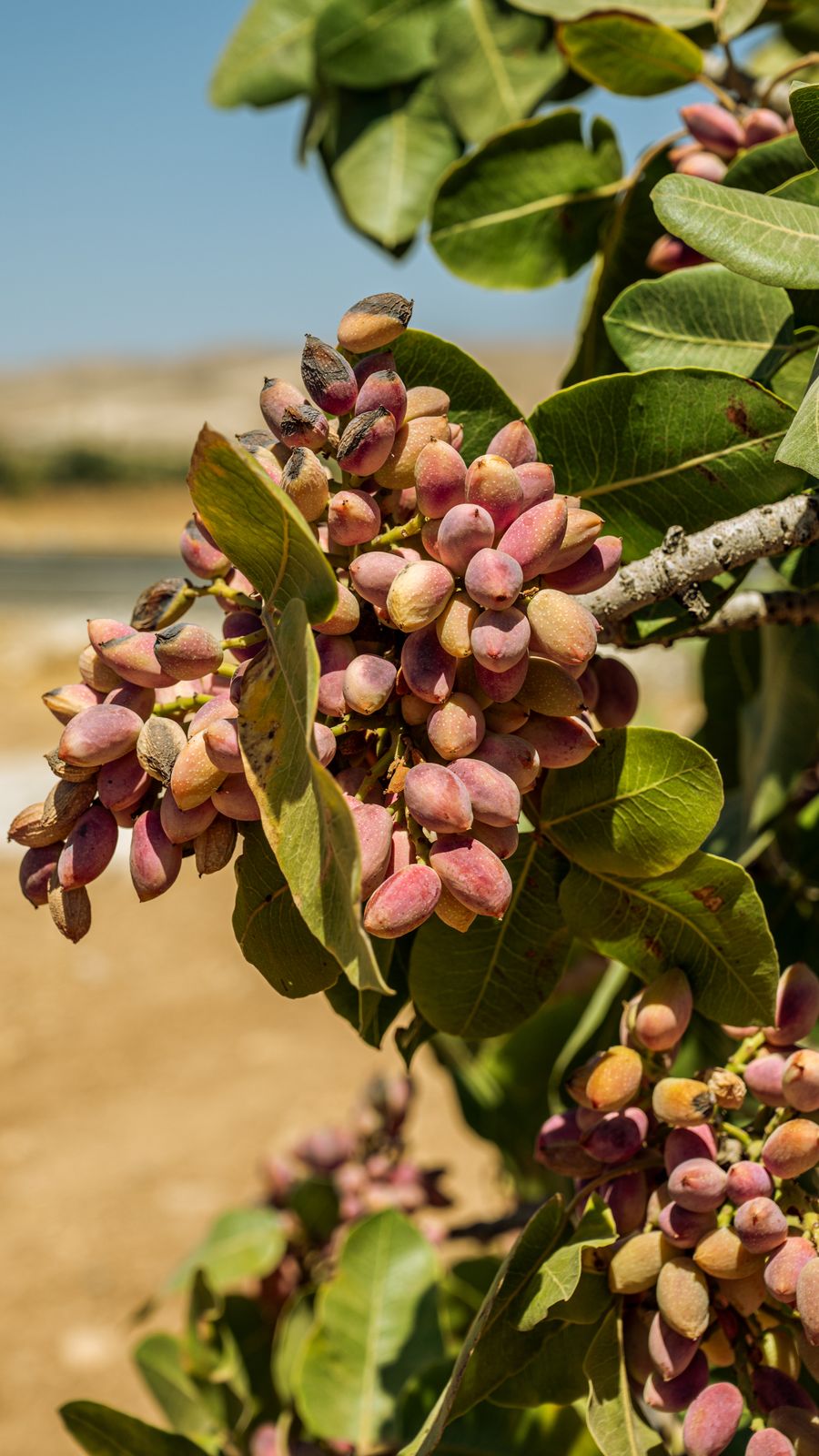
OUR QUALITY APPROACH
From the orchard to your order.
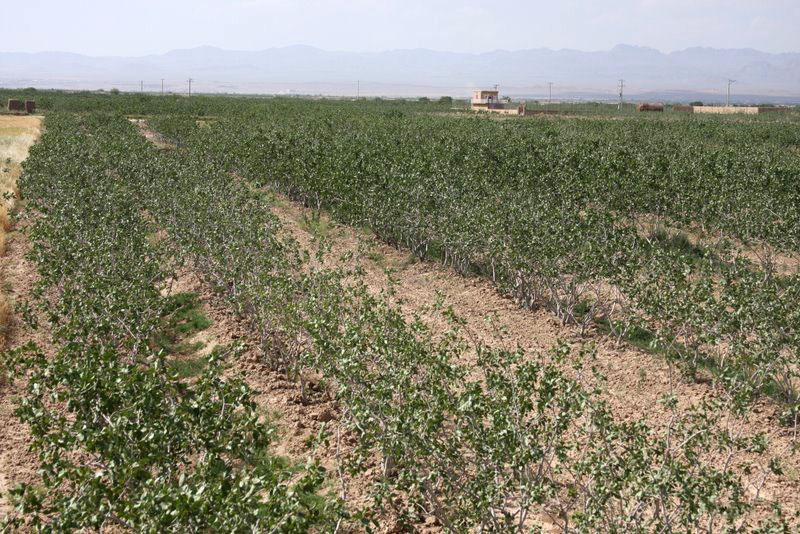
01 / HARVEST & FRESHNESS
Our direct relationships with growers keep the crop at the centre of the conversation. Harvest timing, careful handling and storage all influence the condition of the pistachio.
Crop year, packing date and storage history help us select the right lot for your delivery schedule.
Appearance, aroma and texture give a fuller picture of freshness and condition.
Manage heat, moisture, oxygen exposure and surrounding odours according to the product’s storage requirements.
The pack format and inner protection support careful handling through delivery.
Explore packing formats →02 / SIZE & GRADE
Choose by variety, size and preparation for in-shell pistachios, or by type, colour and application for kernels.
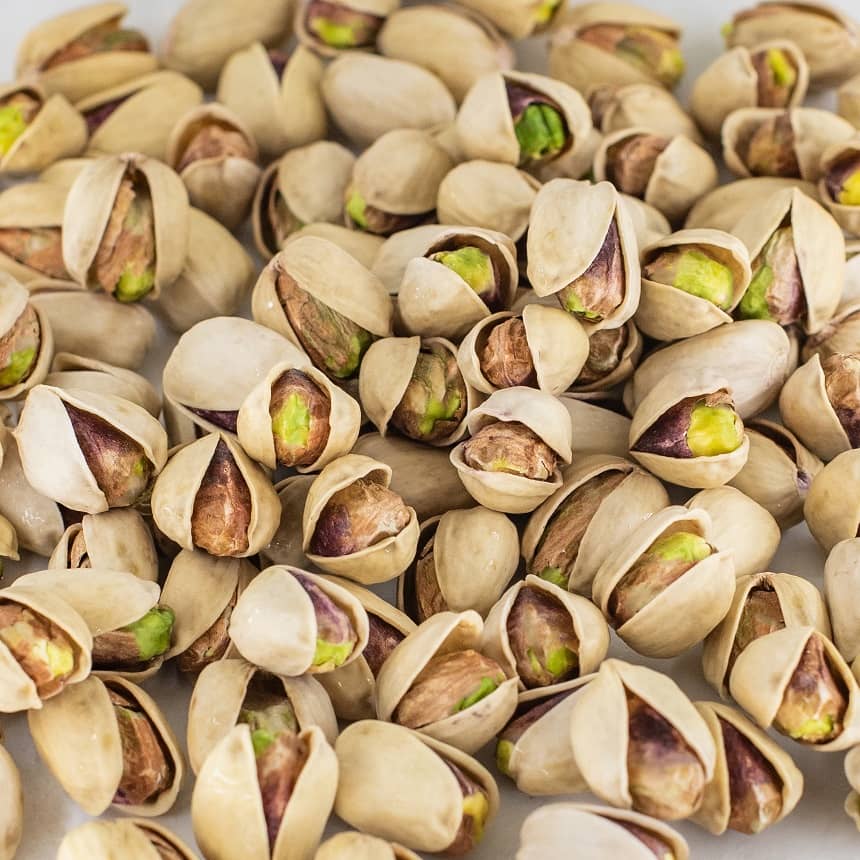
IN-SHELL PISTACHIOS
One ounce ≈ 28.35 g
Counts such as 18/20 or 28/30 describe the number of nuts per ounce. Within this system, a lower count means larger nuts.
Compare variety, count range, shell opening and preparation to find the right presentation.
Compare in-shell varieties →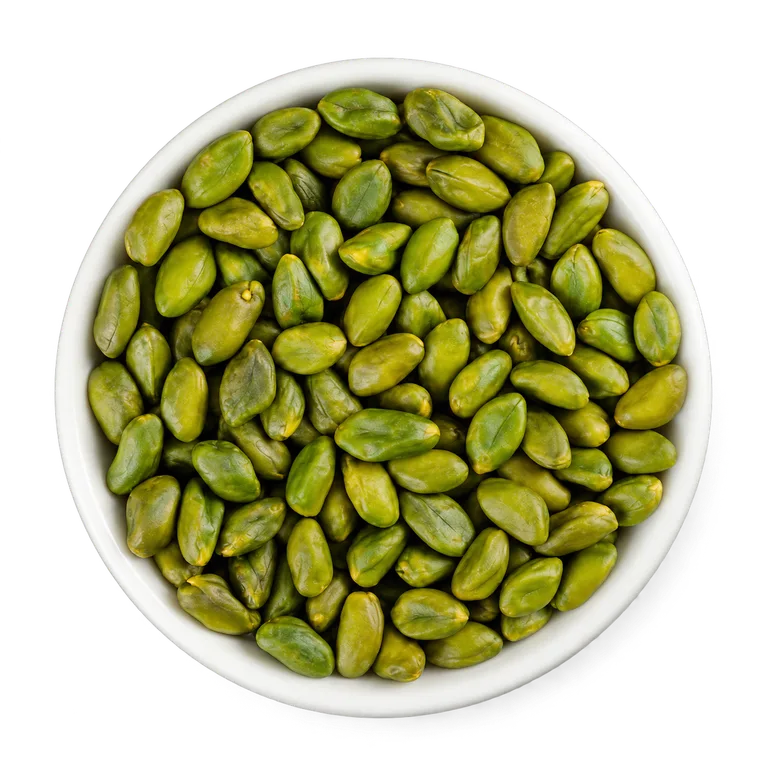
PISTACHIO KERNELS
Green Peeled · Kaal · Normal
For Green Peeled kernels, discuss whole-kernel colour grades S / A / B / C / D. For Kaal and Normal kernels, define the appearance and preparation against a sample.
A reference sample helps you choose the colour and appearance your application needs.
Compare kernel types →Nuts per ounce · typical reference ranges
| Variety | Count ranges |
|---|---|
| RoundFandoghi | 26/28 · 28/30 · 30/32 · 32/34 |
| JumboKalleh Ghouchi | 18/20 · 20/22 · 22/24 · 24/26 · 26/28 |
| LongAhmad Aghaei | 22/24 · 24/26 · 26/28 · 28/30 · 30/32 |
| Super LongAkbari | 18/20 · 20/22 · 22/24 · 24/26 |
| Semi LongBadami | 26/28 · 28/30 · 30/32 |
Sizes are expressed as nuts per ounce (28.35 g). A lower count indicates a larger average nut.
03 / SORTING & CONSISTENCY
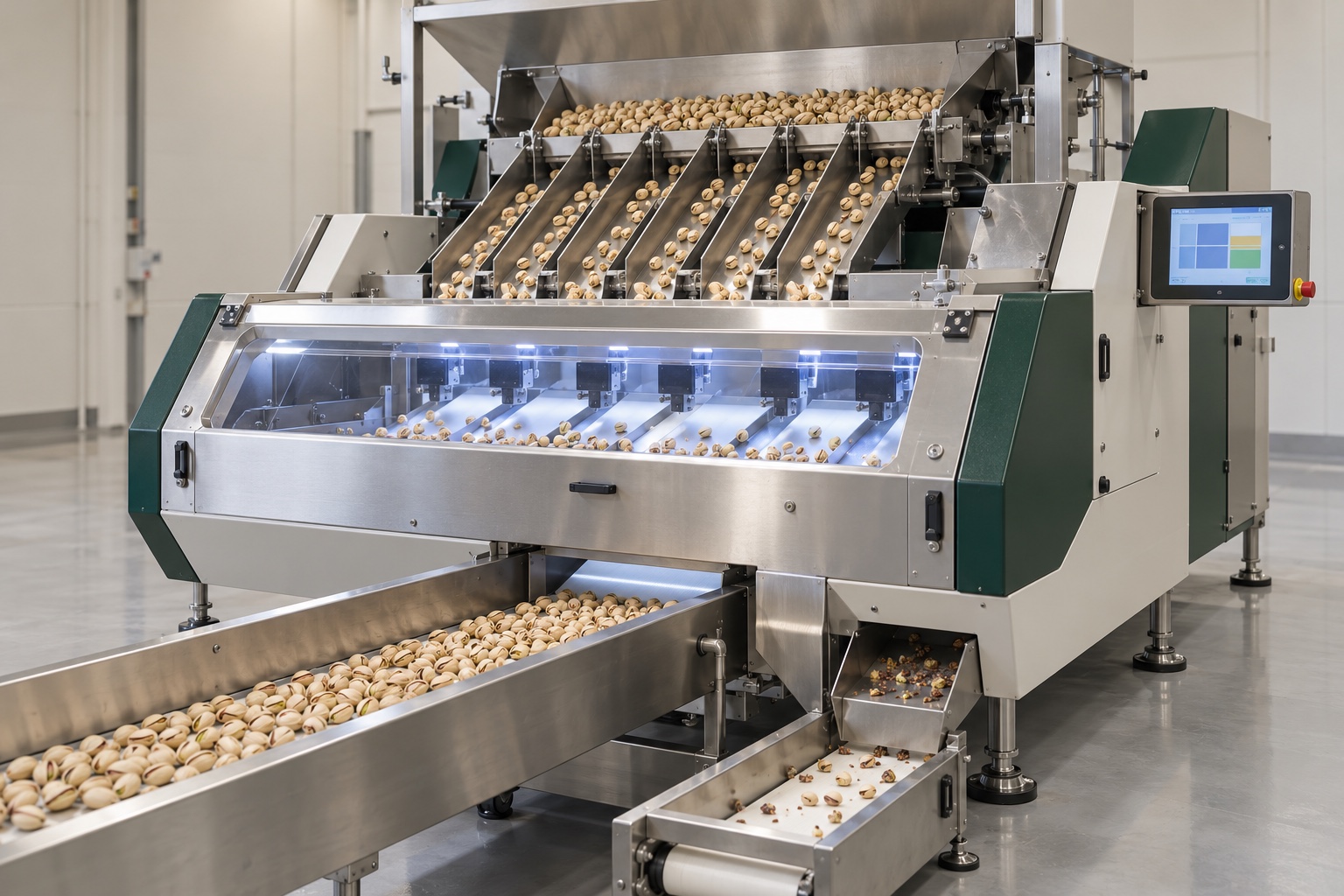
We use up-to-date sorting technology in our own operations to prepare pistachios around the characteristics buyers need. Technology supports consistency; product assessment defines what a suitable batch should look like.
A CLOSER LOOK AT SORTING
Modern optical systems help assess the product as it moves through the sorting line.
Imaging helps distinguish colour differences and visible surface defects.
Product profiles help identify irregular shapes and departures from the selected grade.
Targeted ejection separates selected defects and unwanted material for further review.
Explore current technologyOptical sorting resources from equipment manufacturers.
04 / LABORATORY TESTING
Appearance is one part of quality. Our approach also considers freshness, physical condition and the testing requirements of the order.
Product, intended use and destination guide the testing plan.
Explore independent resources ↓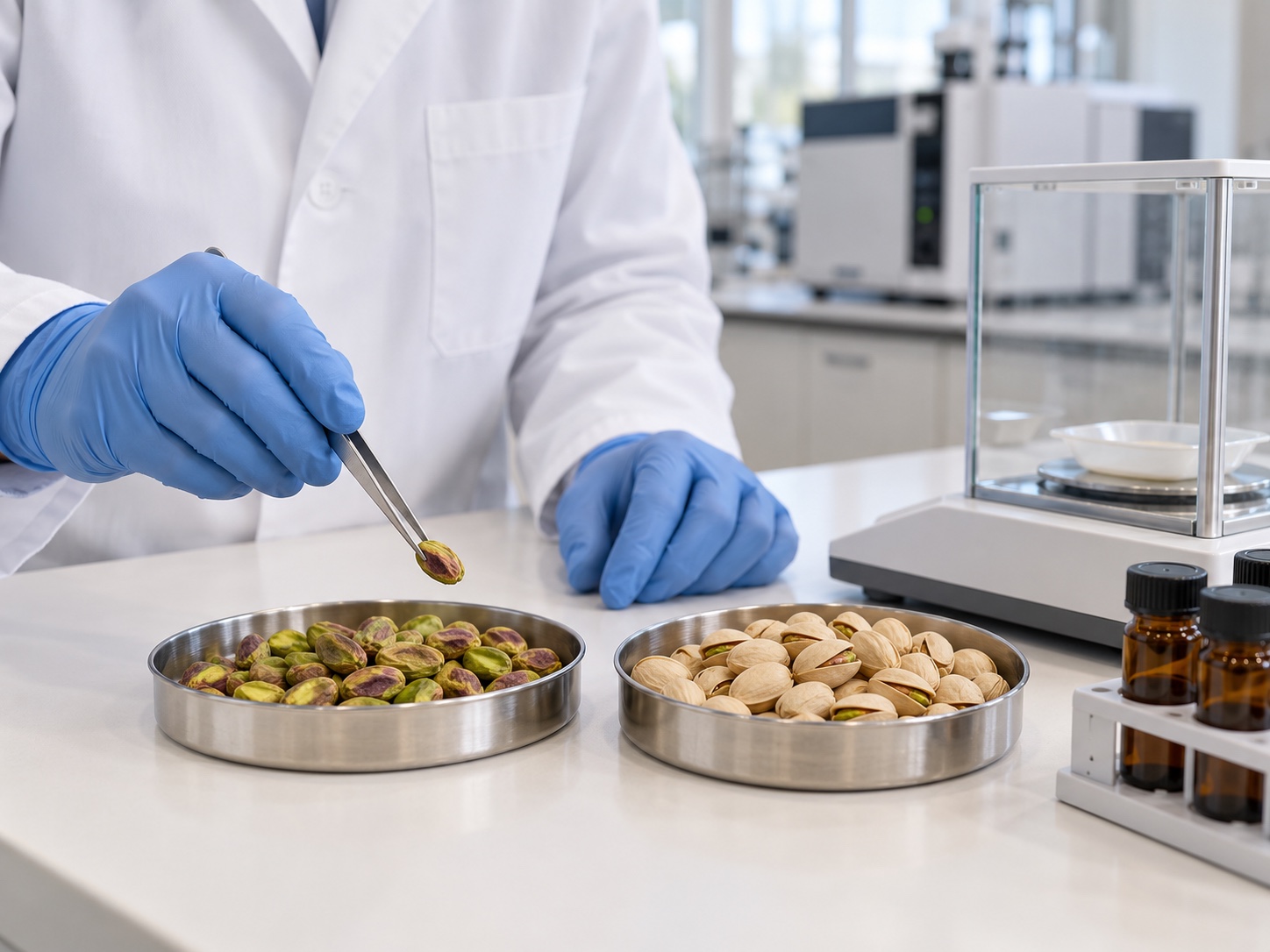
WHAT TO REVIEW FOR YOUR ORDER
Six areas of quality assessmentAflatoxin B1 and total aflatoxins—B1, B2, G1 and G2—are key considerations for pistachios. Results need to be assessed against the requirements for the destination and intended use.
What to specify: sample identity, method, reporting limits and the applicable acceptance limits.Salmonella is a relevant hazard for pistachios, including products used as ingredients. Testing requirements should reflect processing, handling and the intended use of the product.
What to specify: organisms, sample quantity, method and acceptance criteria under the agreed plan.Moisture content and water activity measure different characteristics. Where specified, both help assess the product alongside its preparation, packaging and storage conditions.
What to specify: the measurement, test conditions and product-specific limits.Pesticide residue testing and other contaminant checks, such as metals where relevant, are defined around product risk and destination requirements.
What to specify: the required testing panel and the current limits for the receiving market.Colour, size, shell or kernel condition, aroma and texture all matter. These checks help assess consistency and signs of deterioration against the agreed product and reference sample.
Product assessment complements laboratory analysis; the two serve different purposes.A useful laboratory report identifies what was sampled, what was tested and which method was used. Findings should be reviewed against the specification and linked to the relevant lot.
Ask for the analysis and supporting documents relevant to your order.Your quotation brings the sample, specification, testing scope and documents together in one place. This gives your team a clear reference from product selection to delivery.
05 / DOCUMENTS & ORDER
Product identity, lot references and supporting documents keep purchasing and quality teams working from the same information.
Include your documentation requirements with your enquiry so we can prepare a complete quotation.
QUALITY QUESTIONS
Yes. Include the requested crop year, product, quantity and delivery date in your enquiry. The available lot, packing date and remaining shelf life are confirmed with the quotation.
Yes, when comparing counts per ounce. An 18/20 count contains fewer, larger nuts per ounce than a 28/30 count. Compare the variety and preparation as well as the count.
No. Grade names and letters can vary by supplier. Use the reference sample, agreed appearance and product specification to make a meaningful comparison.
Discuss aflatoxin B1 and total aflatoxins, relevant microbiological checks, moisture, water activity and destination-specific residues or contaminants. The product, intended use and receiving market determine the scope and acceptance criteria.
They are reading resources on food testing and laboratory competence. See the testing scope and laboratory details in your quotation.
LET’S DEFINE YOUR ORDER
Share the product, size or grade, crop-year preference, quantity and destination. Add the sample, analysis and documentation your team needs.
